
Quick Facts About Athens
Athens is one of the world’s oldest cities and one of Europe’s most fascinating travel destinations. The Greek capital blends ancient history with lively neighbourhoods, rooftop restaurants, street markets, and easy access to Mediterranean beaches.
For first-time visitors, Athens works particularly well as a 3-4 day city break, or as the starting point for a longer Greece itinerary that includes islands or coastal areas along the Athens Riviera.
Here are the key things to know before planning your trip.
Language: Greek
Currency: Euro (€)
Airport: Athens International Airport (ATH)
Best Trip Length: 3-4 days for the city, 7 days if including Riviera beaches
City Character: Historic capital with ancient monuments, vibrant neighbourhoods, and coastal access
Athens is surprisingly compact for a major capital city. Many of the most important sights – including the Acropolis, Ancient Agora, and Plaka – are located within a walkable historic centre. At the same time, the southern suburbs link the city directly to the Athens Riviera, where beaches, marinas, and seaside restaurants stretch along the coast.
This blend of ancient history, city culture, and coastal relaxation is what makes Athens such a distinctive destination.
Why Visit Athens
Athens is one of Europe’s most historically significant cities, yet it is also a lively modern capital filled with cafés, markets, nightlife, and excellent food.
Travellers visit Athens for several reasons.
First, it is the heart of ancient Greek civilisation. Landmarks such as the Acropolis, Parthenon, and Ancient Agora connect visitors directly with the foundations of Western philosophy, democracy, and architecture.
Second, the city has a vibrant neighbourhood culture. Areas like Koukaki, Psiri, and Exarchia are filled with local tavernas, rooftop bars, art spaces, and lively street scenes.
Third, Athens offers something many historic capitals cannot: easy access to the sea. The Athens Riviera lies just 20-40 minutes from the city centre and provides beach escapes without needing to travel to the islands.
Because of this, Athens works well as a:
- short cultural city break
- starting point for a wider Greece itinerary
- hybrid city and beach trip
Who Athens Is Best For
Athens is particularly well suited to the following travellers:
- History lovers interested in ancient Greece and archaeology.
- First-time visitors to Greece looking for an accessible introduction.
- European travellers planning a 3-4 day city break.
- Food lovers interested in Greek cuisine and markets.
- Travellers who want a mix of city culture and beaches.
If you prefer quiet nature destinations or traditional island villages, Athens may feel busy. But for travellers interested in culture, food, and history, it remains one of Europe’s most rewarding capitals.
How Many Days Do You Need in Athens?
The ideal length of an Athens trip depends on how deeply you want to explore the city and whether you plan to include time along the coast.
| Trip Length | Best For | Key Experiences |
| 3 Days | Short city break | Acropolis, Plaka, Ancient Agora |
| 4 Days | Relaxed exploration | Museums, neighbourhoods, viewpoints |
| 7 Days | City & beach trip | Athens highlights & Riviera beaches |
3 Days in Athens
Three days is enough to experience the city’s main highlights.
You can comfortably visit:
- the Acropolis and Parthenon
- the Acropolis Museum
- the Ancient Agora
- Plaka and Anafiotika
- Lycabettus Hill
- central neighbourhoods like Psiri
This itinerary works particularly well for short European city breaks.
4 Days in Athens
Four days allows for a more relaxed pace and gives you time to explore neighbourhoods, markets, and additional museums.
With four days you can also add:
- rooftop viewpoints and restaurants
- the Varvakios food market
- a sunset trip to Cape Sounion
- time exploring areas such as Exarchia or Koukaki
For most travellers, four days is the ideal length for an Athens city break.
7 Days in Athens
A week allows you to combine the city with the coastline.
This longer trip could include:
- several days exploring historic Athens
- relaxing beach days along the Athens Riviera
- a day trip to Cape Sounion
- neighbourhood exploration and food experiences
This creates a balanced city and beach trip without leaving the Athens region.
City Break vs Beach Holiday vs Hybrid Trip
One of the first decisions when planning an Athens trip is choosing the style of travel experience you want. Athens can work as a historic city break, a coastal beach stay, or a combination of both.
A helpful way to decide is to think about how you would like most days of the trip to look.
Choose a city break if your priority is exploring monuments, museums, and historic neighbourhoods.
Choose a Riviera beach stay if you want swimming, seaside dining, and a relaxed coastal atmosphere.
Choose a hybrid trip if you would like to combine sightseeing with beach time.
Athens City Break
A classic Athens city break focuses on historic sites and central neighbourhoods.
Travellers typically stay in areas such as:
- Koukaki
- Plaka
- Syntagma
Advantages of a city break include:
- walking distance to major attractions
- easy access to museums and restaurants
- vibrant evening atmosphere
- minimal transport planning
Choose a city break if:
- your trip is 3-4 days long
- you want to walk between attractions
- you prefer a lively urban atmosphere
- beaches are not a priority
Athens Riviera Beach Stay
Some visitors prefer staying directly on the coast rather than in the city centre.
The Athens Riviera stretches south of the city and includes seaside suburbs such as Glyfada, Alimos, and Palaio Faliro.
Advantages include:
- access to beaches and marinas
- seaside restaurants and cafés
- a relaxed coastal atmosphere
However, visiting historic Athens will require tram or taxi travel into the city centre.
Choose a Riviera stay if:
- your trip focuses on beach relaxation
- you want a seaside hotel or marina setting
- you are comfortable travelling into the city for sightseeing
Hybrid City + Beach Trip
A hybrid itinerary combines city exploration with coastal relaxation.
Travellers typically stay somewhere along the Riviera with good tram or metro connections.
Typical hybrid structure:
- sightseeing days in Athens
- beach mornings or afternoons
- sunset visits to Cape Sounion
- relaxed evenings along the coast
Choose a hybrid trip if:
you enjoy mixing sightseeing with relaxed coastal days
you have 5-7 days in Athens
you want both culture and beach time
Where to Stay in Athens
Choosing the right neighbourhood can significantly shape your Athens experience. Some areas are ideal for sightseeing, while others suit beach stays, nightlife, or a quieter local atmosphere.
A helpful way to decide is to consider how you expect to spend most of your time.
Stay in the historic centre if sightseeing is your main priority.
Stay along the Riviera coast if beaches and seaside restaurants are central to your trip.
Choose local residential neighbourhoods if you prefer a quieter base with access to both the city and coast.
Best Areas for First-time Visitors
First-time travellers usually benefit from staying near the historic centre, where most major attractions are located.
Koukaki
Koukaki is one of the best neighbourhoods for visitors. Located just south of the Acropolis, it offers easy access to the Acropolis Museum and nearby historic sites.
The area has a relaxed residential feel, with cafés, bakeries, and local tavernas.
It is ideal for travellers who want to stay close to major attractions without the heavy crowds of Plaka.
Plaka
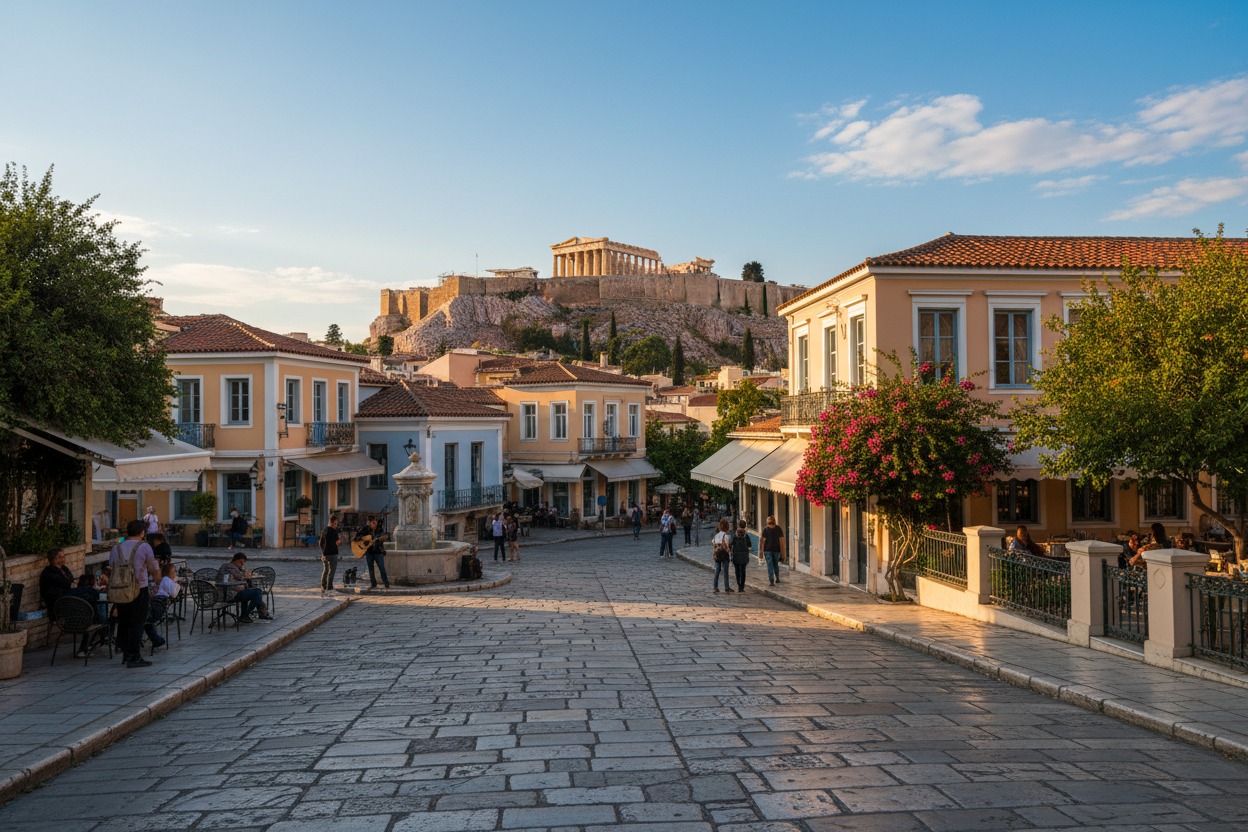
Plaka is the most famous historic district in Athens.
Its narrow streets sit directly beneath the Acropolis and are filled with restaurants, small shops, and neoclassical buildings.
Staying here places you within walking distance of nearly every major sight, although it can feel busy and tourist-heavy during peak season.
Syntagma
Syntagma is Athens’ central square and a major transport hub.
This area offers excellent metro connections and a wide choice of hotels, making it convenient for travellers arriving from the airport or planning day trips.
Choose the historic centre if:
- it is your first visit to Athens
- your trip is short (3-4 days)
- you want to walk to major sights
Best Areas for Beach & City Trips
Travellers who want coastal access should look south of the city centre along the Athens Riviera.
Glyfada
Glyfada is the most developed and lively area along the Athens Riviera.
It offers beaches, shopping streets, cafés, and nightlife. Tram connections link Glyfada directly with central Athens.
This is the best option for travellers who want a seaside holiday with urban energy.
Alimos
Alimos is a quieter coastal suburb known for its marina and relaxed atmosphere.
It has good tram access to the city centre and sits closer to Athens than Glyfada, making it a convenient balance between city access and beach time.
Palaio Faliro
Palaio Faliro sits between Athens and Glyfada and features a long seaside promenade.
The area is quieter than Glyfada but still offers coastal walks, parks, and restaurants.
Choose the Riviera if:
- beach time is a major part of your trip
- you enjoy seaside promenades and marinas
- you are happy commuting into the city for sightseeing
Lively / Nightlife Areas
Athens also has several neighbourhoods known for nightlife, bars, and late-night restaurants.
These areas suit travellers who want an energetic evening atmosphere.
Psiri
Psiri is one of Athens’ main nightlife districts.
The area is packed with cocktail bars, tavernas, live music venues, and street art. Nights here often continue well into the early hours, especially on weekends.
It is a good choice for travellers who enjoy bar-hopping and lively nightlife.
Exarchia
Exarchia is Athens’ alternative and creative district.
Known for its independent spirit, the area features underground bars, art spaces, bookstores, and cafés. The atmosphere is lively but less tourist-focused than other central areas.
Choose nightlife areas if:
- you want restaurants and bars within walking distance
- nightlife is an important part of your trip
- you prefer a lively evening atmosphere
Quiet Local Neighbourhoods
Some travellers prefer staying in residential areas that feel less tourist-focused.
Kallithea
Kallithea lies between central Athens and the coast. It has good metro connections and a distinctly local neighbourhood atmosphere.
This area works well for travellers seeking lower hotel prices and convenient transport links.
Nea Smyrni
Nea Smyrni centres around a large park and a lively square filled with cafés and restaurants.
It feels distinctly local while still being only a short taxi or tram ride from the city centre.
Choose local neighbourhoods if:
- you want restaurants and bars within walking distance
- nightlife is an important part of your trip
- you prefer a lively evening atmosphere
Quiet Local Neighbourhoods
Some travellers prefer staying in residential areas that feel less tourist-focused.
Kallithea
Kallithea lies between central Athens and the coast. It has good metro connections and a distinctly local neighbourhood atmosphere.
This area works well for travellers seeking lower hotel prices and convenient transport links.
Nea Smyrni
Nea Smyrni centres around a large park and a lively square filled with cafés and restaurants.
It feels distinctly local while still being only a short taxi or tram ride from the city centre.
Choose local neighbourhoods if:
- you want a quieter base
- you prefer local cafés and everyday Athenian life
- you want a balance between the city and the coast
How to Get Around Athens
Athens has a relatively efficient public transport system connecting the airport, city centre, and coastal suburbs.
Understanding the main options makes navigating the city much easier.
Metro
The Athens metro is the fastest and easiest way to travel around the city.
It connects major locations including:
- Athens International Airport
- Syntagma Square
- Monastiraki
- the port of Piraeus
The metro is modern, reliable, and simple to use. For most travellers, it will be the main way to move around Athens.
Tram
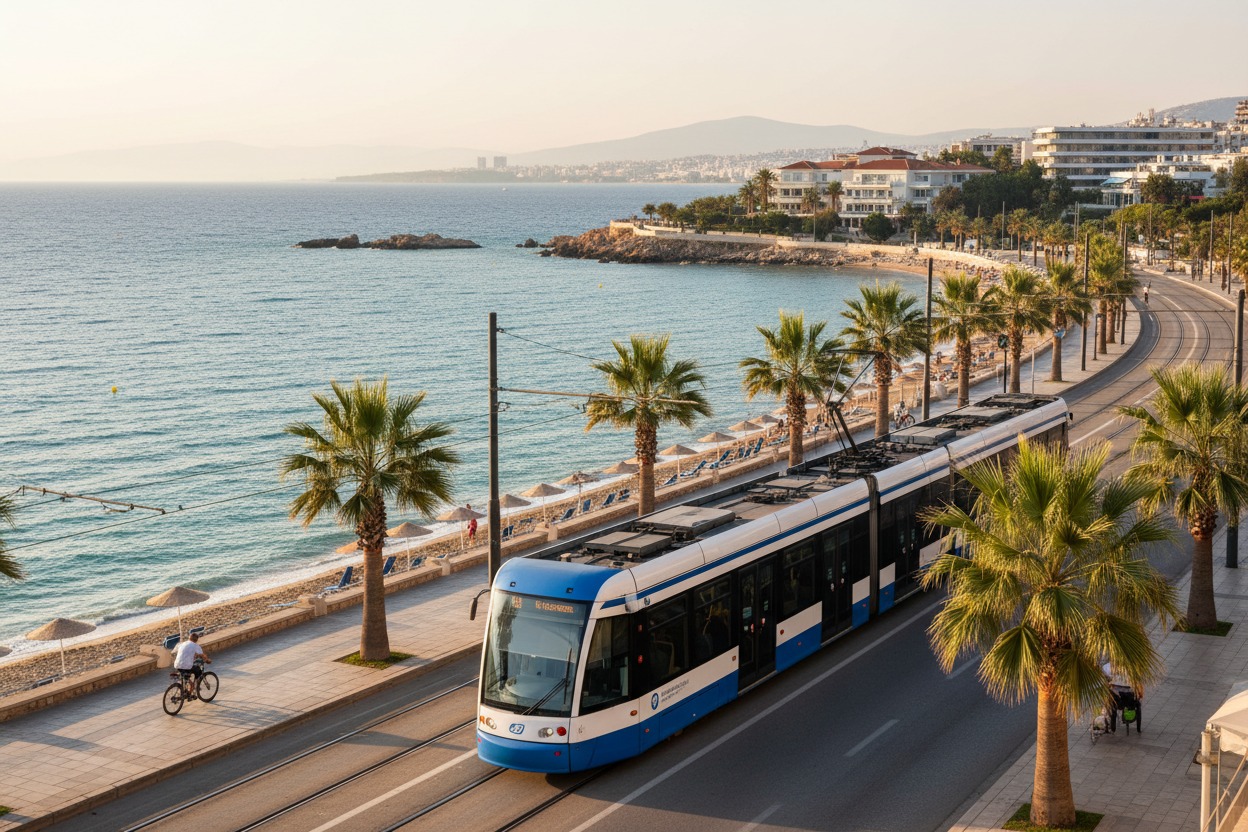
The Athens tram connects the city centre with the Athens Riviera.
It runs from Syntagma down the coast through areas such as:
- Palaio Faliro
- Alimos
- Glyfada
This makes the tram particularly useful for beach visits or for travellers staying along the coast.
Buses
Athens has an extensive bus network that covers areas not served by the metro or tram.
However, buses can be slower because of traffic. Visitors typically rely on them only occasionally.
Taxis
Taxis in Athens are relatively affordable compared with many European capitals.
They are widely available and useful for:
- late-night travel
- neighbourhoods without metro access
- trips between the city and the coast
Ride-hailing apps also operate in Athens.
Car Hire
Hiring a car is rarely necessary for exploring central Athens.
Traffic can be heavy and parking difficult in the historic centre.
However, car hire can be useful for:
- exploring the Athens Riviera
- visiting Cape Sounion
- day trips outside the city
Most visitors should avoid driving in central Athens.
Top Things to Do in Athens
Athens offers a wide range of historic and cultural sites, but first-time visitors should prioritise a few essential experiences – especially on shorter trips.
If you only have 2-3 days, focus on these core highlights:
- the Acropolis and Parthenon
- the Acropolis Museum
- the Ancient Agora
- exploring Plaka and Anafiotika
Additional experiences such as Lycabettus Hill, neighbourhood exploration, and Riviera beaches can then be added depending on how much time you have.
The Acropolis & Parthenon
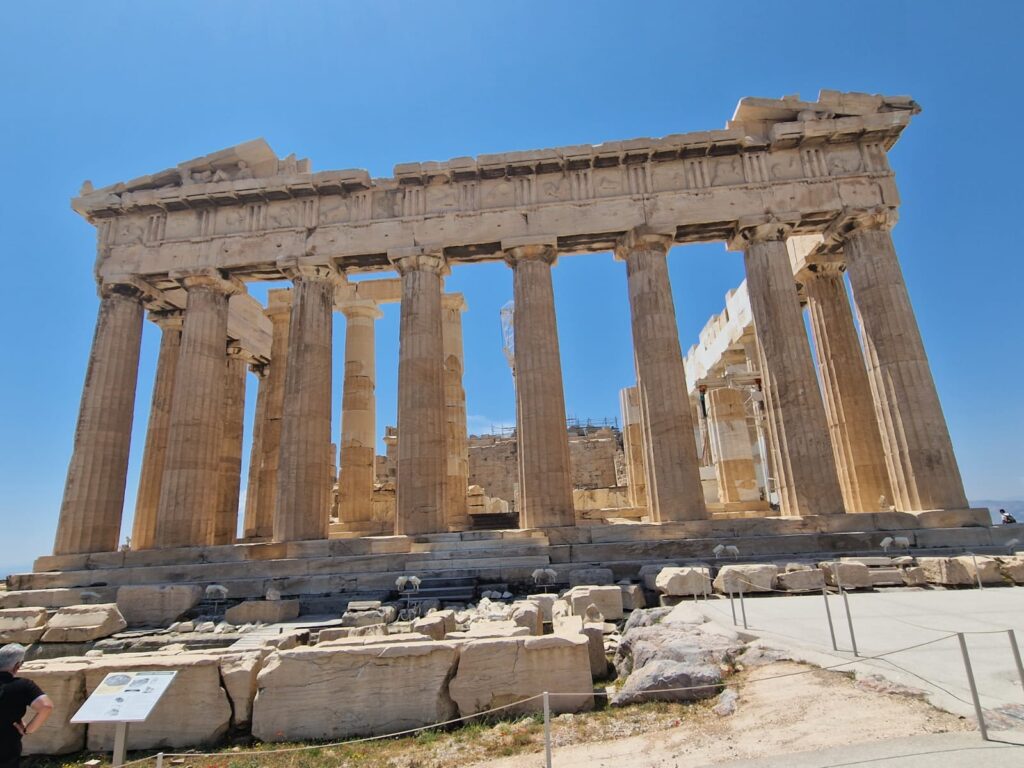
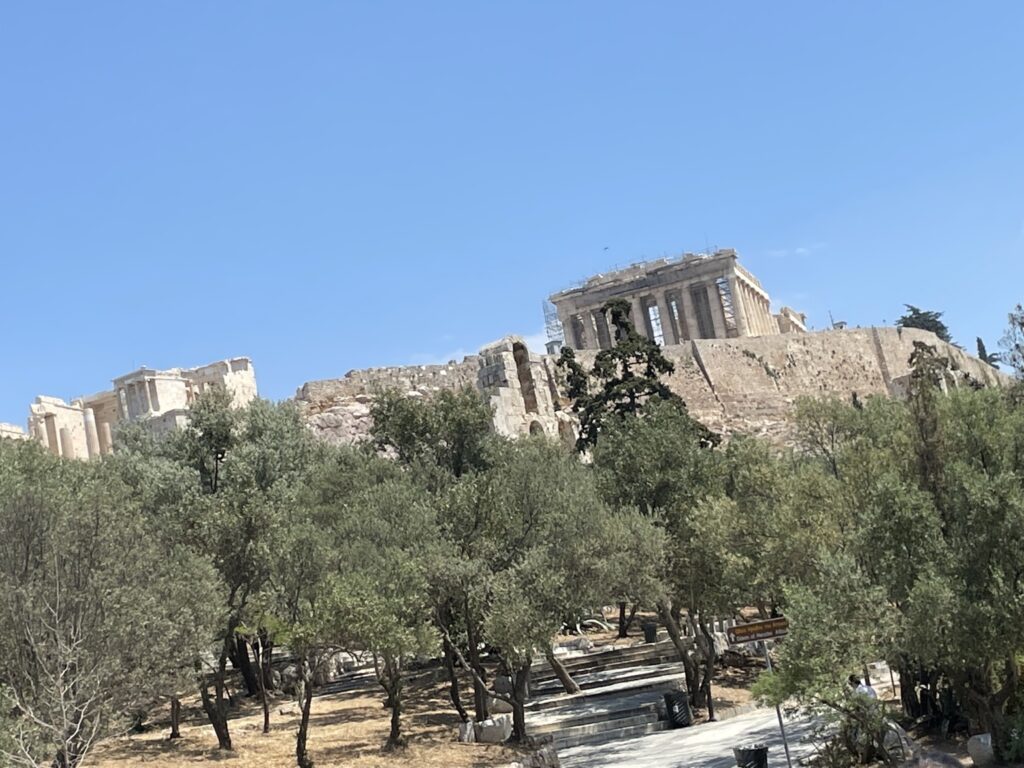
The Acropolis is the most iconic landmark in Greece.
Rising above the city on a rocky hill, it contains several ancient structures including the Parthenon, Erechtheion, and Temple of Athena Nike.
Visiting the Acropolis offers sweeping views across Athens and a direct connection to ancient Greek history.
Arriving early in the morning is the best way to avoid crowds and heat.
Acropolis Museum
Located just below the Acropolis, the Acropolis Museum houses thousands of artefacts discovered on the ancient site.
The museum’s modern design allows visitors to view sculptures, statues, and architectural fragments in natural light.
Its top floor aligns with the Parthenon itself, displaying original sculptures in their historical context.
Ancient Agora & Temple of Hephaestus
The Ancient Agora was once the centre of public life in classical Athens.
Philosophers debated here, merchants traded goods, and citizens gathered for political discussion.
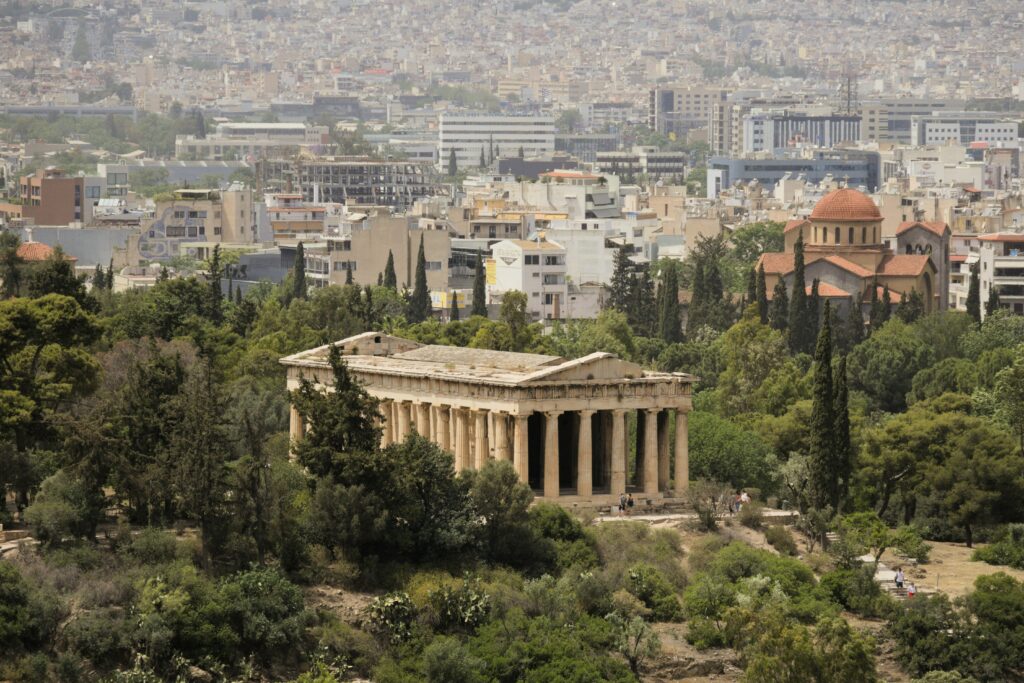
The site also contains the remarkably preserved Temple of Hephaestus, one of the best-preserved ancient Greek temples.
Plaka & Anafiotika
Plaka is the oldest neighbourhood in Athens and one of the most charming places to explore.
Its narrow streets are filled with small restaurants, historic buildings, and shops.
Within Plaka lies Anafiotika, a tiny district built by island workers in the 19th century. Whitewashed houses and quiet alleyways give it the atmosphere of a small Cycladic village beneath the Acropolis.
Lycabettus Hill
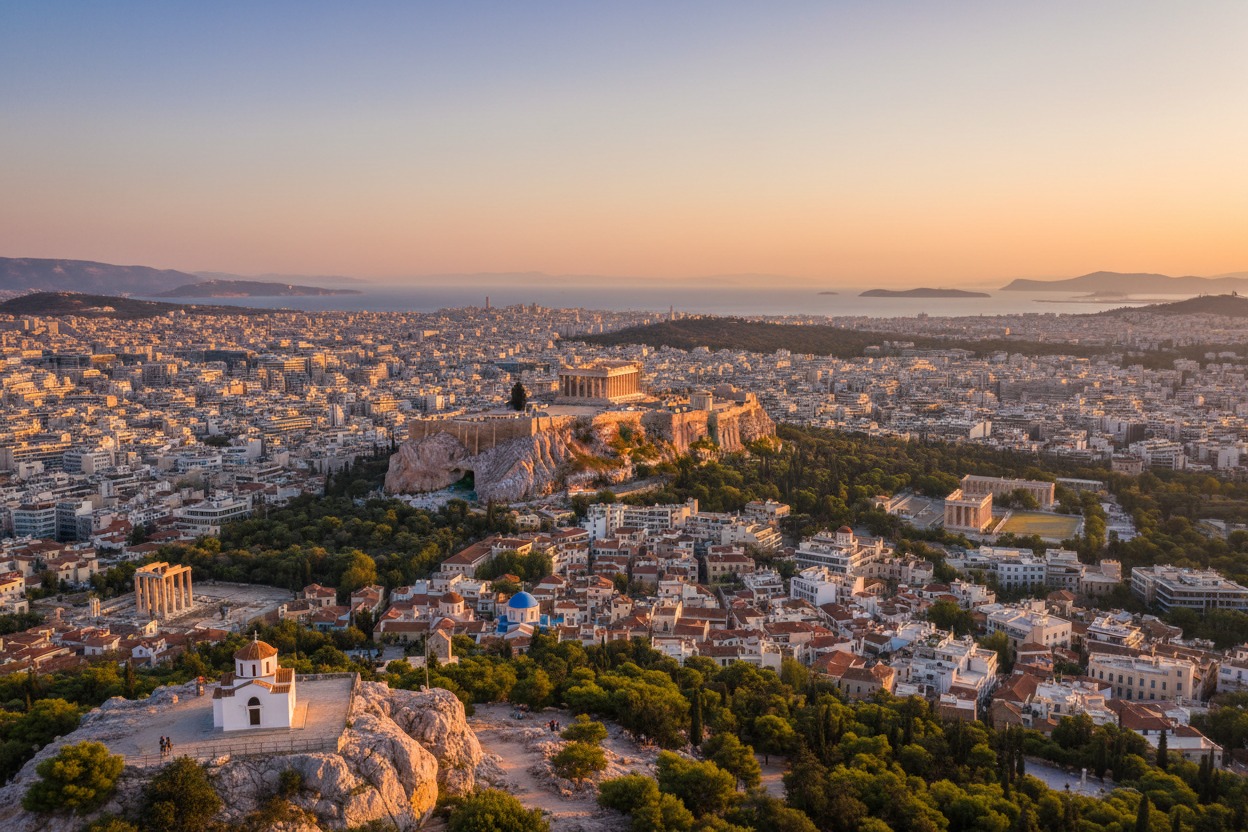
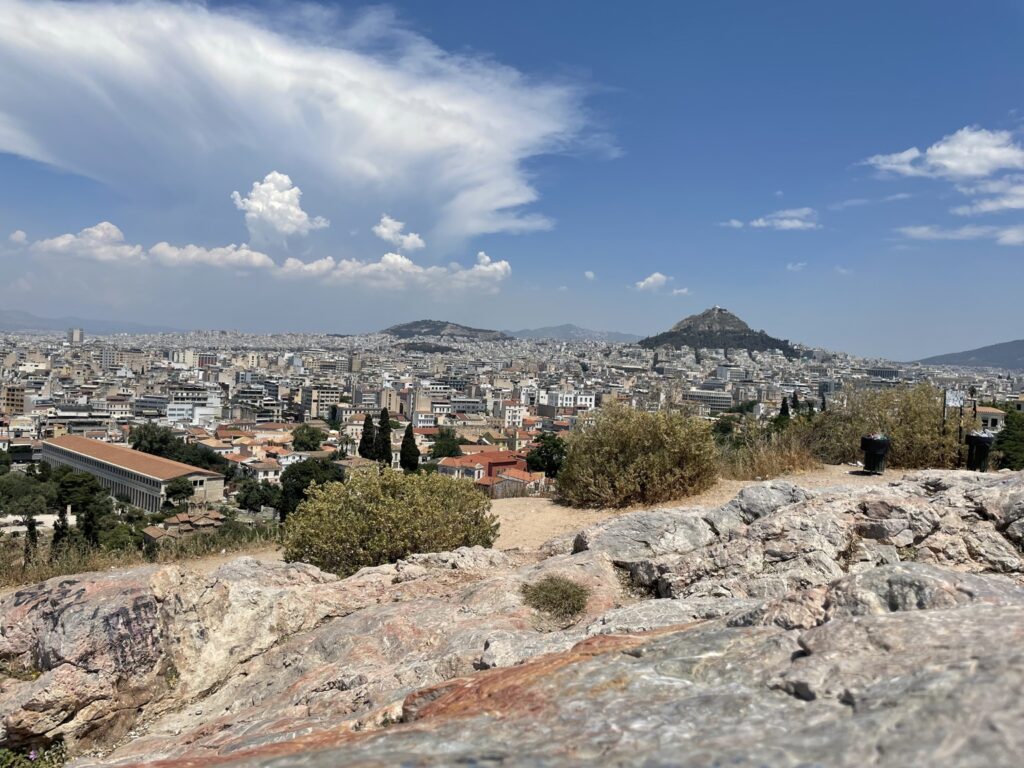
Lycabettus Hill is the highest point in central Athens.
Visitors can reach the summit either by hiking or by funicular railway.
From the top, sweeping views stretch across Athens to the sea and the mountains beyond. Sunset is the most popular time to visit.
Varvakios Market
Varvakios Central Market is Athens’ main food market.
Butchers, fishmongers, spice stalls, and produce vendors fill the indoor market halls.
It is one of the best places to see everyday Athenian life and sample traditional Greek ingredients.
Psiri & Exarchia neighbourhoods
Psiri is known for its lively atmosphere, street art, bars, and restaurants, and has become one of Athens’ main nightlife districts.
Exarchia has a very different character – a creative, alternative neighbourhood filled with independent cafés, bookstores, and art spaces.
Both areas offer a glimpse into modern Athenian culture beyond the historic centre.
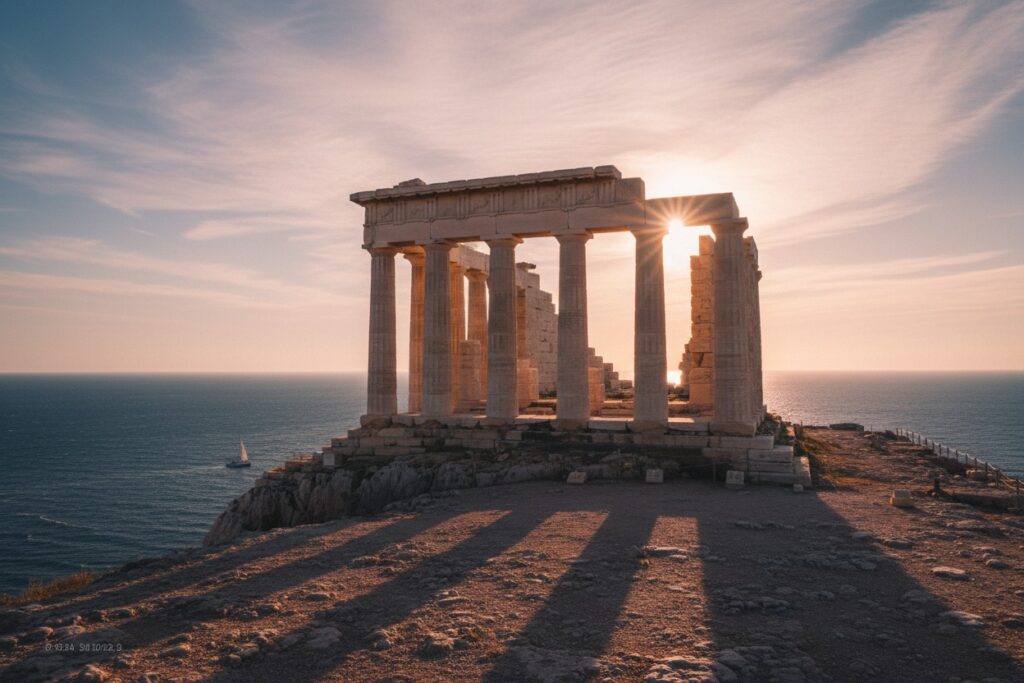
Cape Sounion & Temple of Poseidon
Located about 70 kilometres south of Athens, Cape Sounion is one of the most dramatic places in Attica.
The Temple of Poseidon stands on cliffs overlooking the Aegean Sea.
Sunset visits are particularly popular, when the temple glows against the evening sky.
Athens Riviera beaches
The Athens Riviera stretches along the southern coastline and offers several beaches easily accessible from the city.
Popular beach areas include:
- Glyfada
- Vouliagmeni
- Alimos
Some beaches are organised with sunbeds and restaurants, while others are more natural.
These coastal areas provide a relaxing contrast to the historic city.
Rooftop viewpoints & open-air cinemas
Athens has a strong rooftop culture.
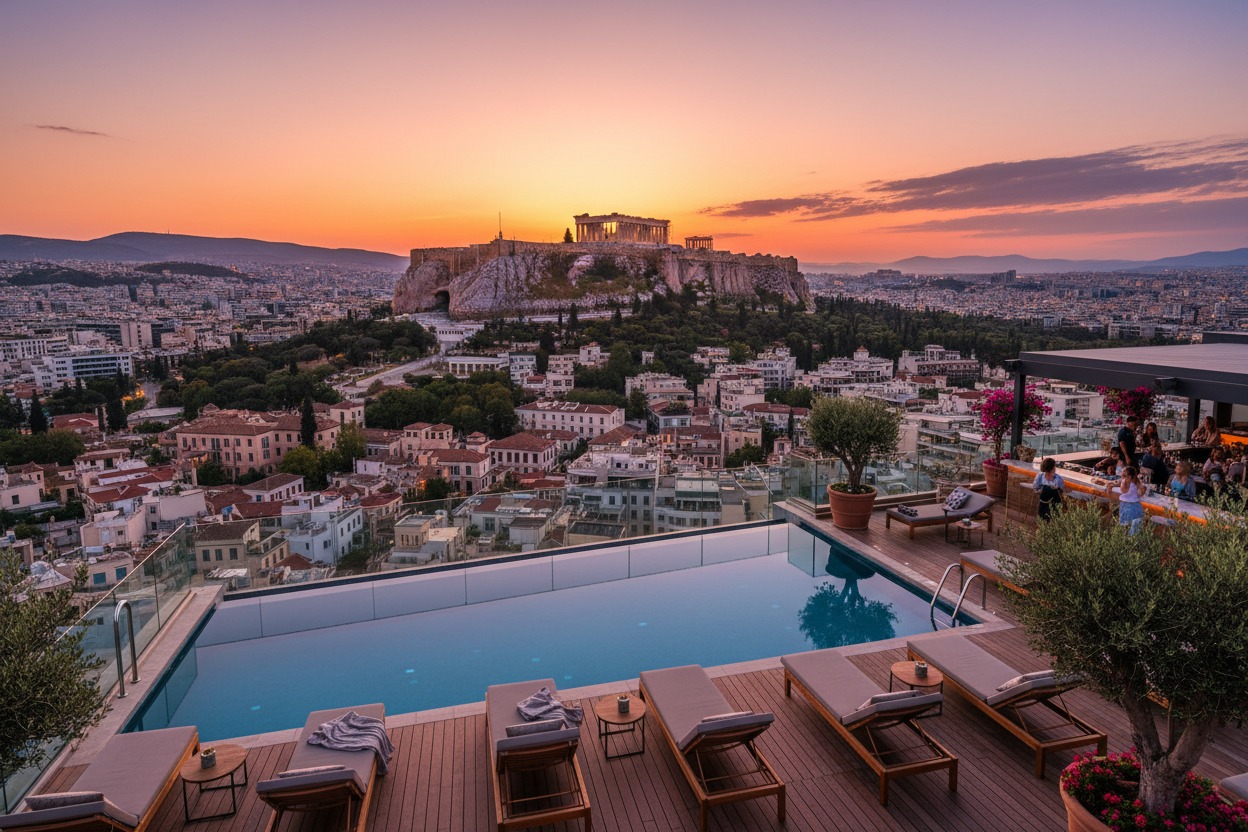
Many hotels and restaurants offer terraces with views of the illuminated Acropolis at night.
The city is also famous for its open-air cinemas, where films are shown outdoors during the warm months.
Watching a movie under the stars with the Acropolis visible nearby is a uniquely Athenian experience.
Suggested Athens Itineraries
Planning your days in advance helps you make the most of your time in Athens.
3-4 Day Athens City Break
Day 1
Visit the Acropolis early in the morning.
Explore the Acropolis Museum afterward.
Spend the afternoon wandering through Plaka and Anafiotika.
Day 2
Visit the Ancient Agora and Temple of Hephaestus.
Spend the afternoon exploring neighbourhoods like Psiri and Monastiraki.
Day 3
Visit a museum or the Varvakios Market in the morning.
In the evening, head to Lycabettus Hill for sunset views.
Optional Day 4
Take a half-day trip to Cape Sounion and the Temple of Poseidon.
7 Day Athens & Riviera Trip
Days 1–3
Explore Athens’ historic centre and major monuments.
Days 4–5
Relax along the Athens Riviera with beach mornings and coastal restaurants.
Day 6
Take a scenic drive or tour to Cape Sounion.
Day 7
Explore neighbourhoods, markets, and rooftop restaurants before departure.
Food & Restaurants in Athens
Food is a central part of the Athens travel experience. The city offers everything from traditional tavernas to lively food markets and scenic rooftop restaurants.
Different dining styles suit different times of the day or stages of your trip.
Classic Greek Dishes
Some dishes every visitor should try include:
- Moussaka – baked layers of aubergine, meat, and béchamel
- Souvlaki – grilled meat skewers often served with pita
- Greek salad – tomatoes, cucumber, olives, and feta
- Fresh seafood – widely available in coastal areas
Many of these dishes are served in traditional tavernas across the city.
Street Food
Street food plays an important role in Athens’ dining culture.
Popular quick meals include:
- gyros wraps
- souvlaki sandwiches
- sesame bread rings called koulouri
Street food is perfect for quick lunches while sightseeing or late-night snacks after exploring the city.
Tavernas
Traditional tavernas are one of the best ways to experience Greek cuisine.
These relaxed restaurants serve classic dishes designed for sharing.
Tavernas are best visited in the evening, when locals gather for long meals with wine, conversation, and multiple dishes.
Neighbourhoods such as Koukaki, Psiri, and Plaka are particularly known for their tavernas.
Rooftop Restaurants
Athens is famous for rooftop dining with views of the Acropolis.
These restaurants are especially popular at night when the Parthenon is illuminated.
A rooftop dinner works particularly well as:
- a special evening during a short city break
- a final-night celebration meal
- a relaxed evening after a day of sightseeing
Reservations are often recommended during peak travel seasons.
Practical Travel Tips
A few simple planning tips can make your Athens trip much smoother.
Book Acropolis tickets in advance, particularly during the summer months when visitor numbers are high.
Visit major outdoor sites early in the morning or late afternoon to avoid both crowds and extreme heat.
Use the metro from the airport, which is the most straightforward way to reach central Athens.
Wear comfortable shoes – many historic areas have uneven stone streets.
Bring water during summer sightseeing, as temperatures often exceed 30°C.
Common Mistakes First-time Visitors Make
One common mistake is visiting the Acropolis at midday, when both heat and crowds are at their peak.
Another is underestimating the summer temperatures. Athens can be extremely hot between June and August.
Some travellers also book accommodation far from metro stations, which can make getting around more difficult.
Finally, visitors sometimes try to see too many attractions in a single day.
Athens is best enjoyed at a relaxed pace, combining historic sights with neighbourhood exploration, food, and rooftop views.
Final Planning Advice
Athens rewards travellers who balance history with everyday city life.
Plan time to see the iconic ancient monuments, but also leave space to explore neighbourhood cafés, local markets, and rooftop viewpoints.
Most visitors find that four days provides the ideal Athens city break, while a week allows you to combine the city with the beaches of the Athens Riviera.
With thoughtful planning, Athens offers a rich mix of ancient history, vibrant culture, and Mediterranean coastal life – making it one of Europe’s most memorable travel destinations.